
Zoë Boehm’s Return to the Case
Down Cemetery RoadZoë Boehm moves from estranged partner to determined investigator, taking up Joe’s unfinished case and becoming an ally who confronts the violence surrounding Sarah and Dinah.
increasing Bearing strength in each event
 decreasing
Bearing strength in each eventdecreasingThe Partner Who Leaves
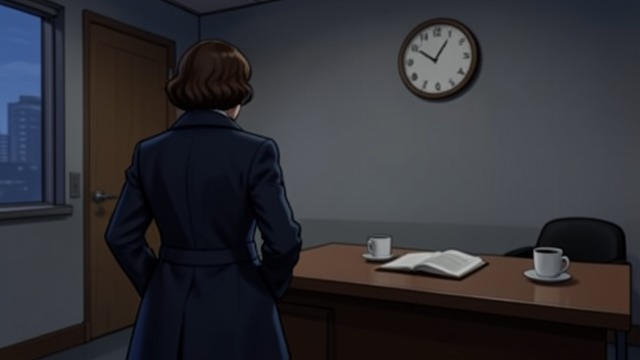
The Partner Who Leaves
A familiar rupture
Zoë Boehm appears in the office of Oxford Investigations during another argument with Joe Silvermann. She mocks his romanticism and his limitations as a detective, but her irritation is intimate, shaped by years of knowing him rather than by indifference.
When Sarah asks for help finding Dinah, Zoë warns that Joe is a soft touch and leaves the office. Her departure reinforces the impression that she has chosen distance from Joe and the work they share.
Absence with a pattern
Zoë’s absences are part of an old rhythm: she returns, reads Joe the riot act, and then leaves for London. Their marriage has ended as a romantic partnership, but the attachments beneath the quarrels have not disappeared.
At this stage she does not yet know what Sarah’s investigation will cost. Her refusal to stay is not a permanent refusal of responsibility; it is the last ordinary separation before Joe’s death changes what distance means.
Joe’s Death Reopens the Bond
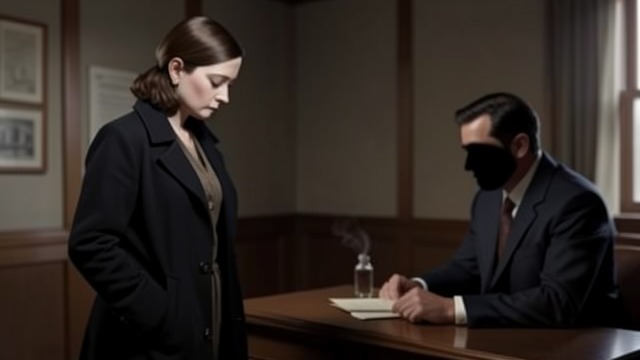
Joe’s Death Reopens the Bond
Grief becomes suspicion
After Joe is found dead, Zoë returns to Oxford and confronts Sarah while Sarah is weakened by medication and the aftermath of the police investigation. She suspects Sarah because Sarah’s file has vanished, but she also recognizes that Joe’s death has been arranged to look like something it was not.
Zoë refuses to accept the planted drugs as proof that Joe was a dealer. Her anger protects his reputation even as she acknowledges his flaws, and the investigation becomes a way to answer a loss she can no longer address directly to him.
Demanding a truthful act
Zoë learns that Sarah gave the police a false statement blaming Joe for drugs. She insists that Sarah retract it, not because doing so is safe, but because the lie compounds the harm already done to the dead detective.
Her demand reveals the shape of her grief: she cannot bring Joe back, but she can refuse to let the official story define him. Sarah’s decision to retract marks the point at which their relationship changes from suspicion into a difficult alliance.
Choosing the Dangerous Ally

Choosing the Dangerous Ally
Finding Sarah in hiding
Zoë tracks Sarah to the Scottish coast after discovering that Sarah called the Oxford Investigations office. She arrives prepared, carrying a small pistol and supplies, and finds Sarah no longer drugged but still isolated and pursued by events she cannot safely explain to the authorities.
Instead of leaving Sarah to face the danger alone, Zoë listens to her account of Downey, Dinah, and the hidden operation. She judges that the press cannot yet protect them and that the only way to make the story credible is to reach Downey.
A practical partnership
Zoë helps turn Sarah’s scattered knowledge into a plan: locate a boat and return toward the island. Her bluntness makes room for Sarah’s own choices rather than replacing them, even as she keeps pressing for speed and caution.
Their partnership does not depend on instant trust or shared temperament. It develops through danger, mutual information, and the recognition that each woman would be abandoning someone vulnerable by walking away.
The Shot at the Chapel
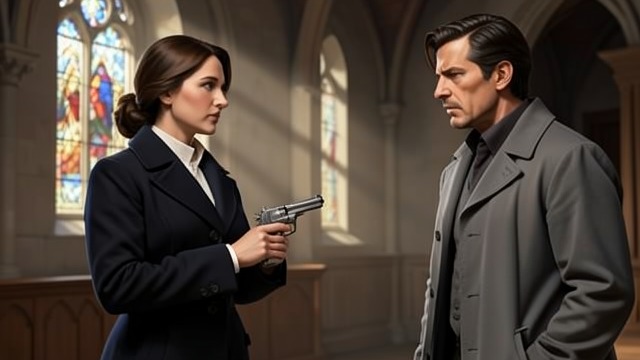
The Shot at the Chapel
Reading the threat
At the chapel, Zoë sees Amos Crane turn a fragile reunion into a hostage situation. She has her pistol, but its chamber is empty; Crane understands the weakness and tries to exploit the pause it creates.
His speech is designed to make her hesitate by describing exactly what a missed shot would cost. Zoë listens without giving him the reassurance he expects, while Sarah tries to get Dinah away from the immediate danger.
Refusing the expected hesitation
When Amos drops toward his own weapon, Zoë fires first and ends his threat. The shot is not presented as an easy victory: she has acted under pressure, with a companion’s life in danger and no guarantee that her judgment will be right.
Her action completes the turn begun by Joe’s murder. Zoë, once the partner who left the office, has returned to finish the work he could not complete, not as a detective solving every mystery but as a woman who refuses to let another killer dictate the ending.
A Survivor Beside Sarah
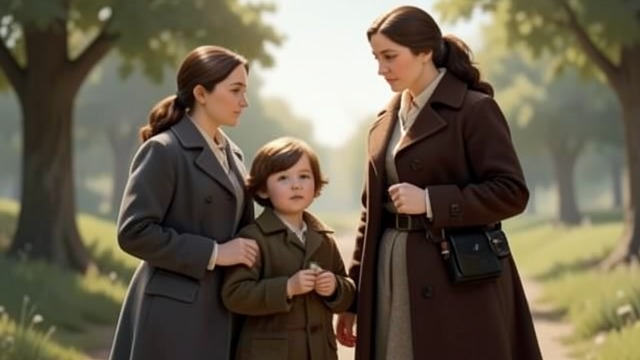
A Survivor Beside Sarah
Choosing to remain
After Amos is shot, Zoë stays with Sarah and Dinah as the immediate crisis recedes. Sarah returns carrying the child, while Zoë meets her in the sunlight with the composure of someone who knows that the danger has not been fully resolved.
Her presence matters because Sarah’s survival is no longer a solitary achievement. Zoë has chosen to remain when leaving would have been safer, and she offers companionship without pretending that the losses can be repaired.
The case remains unfinished
The ending gives Zoë no formal justice for Joe and no guarantee that the department’s secrets will become public. She has helped protect Dinah, exposed the violence of the operation to those who survived it, and removed Amos from the immediate pursuit.
Her trajectory closes on an ongoing obligation rather than a neat conclusion. The case has changed her from an estranged partner into a witness and ally whose next task will be helping Sarah and Dinah live with what they have survived.
At Sarah’s first visit to Oxford Investigations
After Sarah discovers Joe’s body
After Zoë reaches Sarah in Scotland
During the final confrontation at the chapel
After Sarah returns from the woods
